Sudan: more than one in three in a food crisis
Sudan · Darfur · Kordofan
- civilians killed
- 1,400January–June 2026
- in hunger catastrophe
- 135,000February–May 2026
- in hunger emergency
- 5.1 millionFebruary–May 2026
Last reviewed · Last changed
Researched and written with AI · Method

135,000 people in Sudan were in catastrophe, where people starve and die (IPC Phase 5), in spring 2026 – more than live in Esbjerg Municipality (114,824). At the same time, more than 5 million were in a hunger emergency, where families skip meals and children die of malnutrition (IPC Phase 4), as the war between the army and the Rapid Support Forces entered its fourth year, and drought cut the harvest.
The figures are minimums from different sources and periods — see the table below.
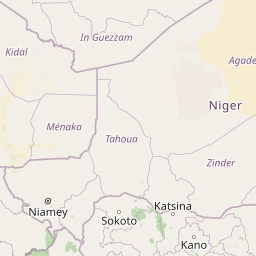
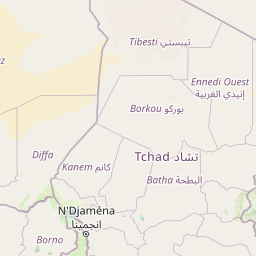
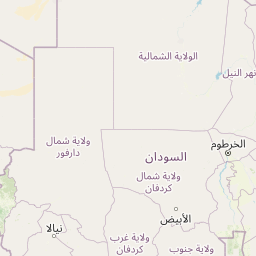
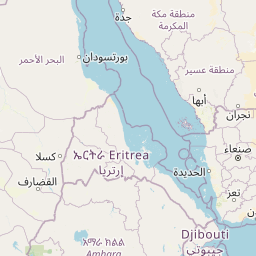
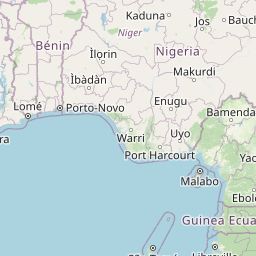
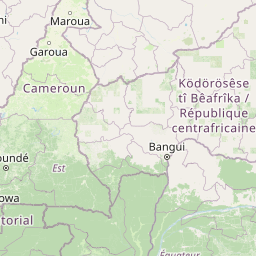
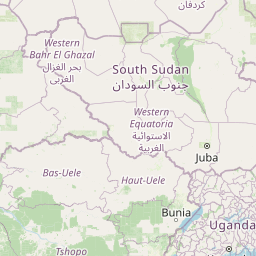
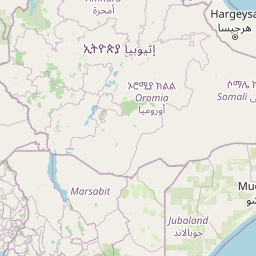
© OpenStreetMap contributors (ODbL)

Who is fighting
The war that broke out on 15 April 2023 stands between the Sudanese Armed Forces (SAF) under Abdel Fattah al-Burhan and the paramilitary Rapid Support Forces (RSF) under Mohamed Hamdan Dagalo, known as Hemedti. The fighting has particularly hit Darfur, Kordofan, Blue Nile and cities such as El Obeid and Khartoum.
The army leadership presents itself as the legitimate state authority in a UN member state. Al-Burhan has demanded that the RSF withdraw from the cities it controls, that weapons be gathered under a single national army, that flows of arms and money to the RSF be stopped, and that a Sudanese political process lead to a constitution and elections. In October 2026 he said, according to the Sudan News Agency, that the military line will continue until the RSF is removed.
According to its response to a US mediation proposal in July 2026, the RSF accepted a humanitarian ceasefire under UN supervision, but not a withdrawal from the areas it holds. The group demands a restructured national army with regional representation, a transitional government and the exclusion of Islamist factions from the army and politics, and it says that future agreements must take account of the present control on the ground.
The UN Independent International Fact-Finding Mission for the Sudan found in September 2026 reasonable grounds to believe that both the army and the RSF have committed serious violations of human rights and international humanitarian law that may amount to war crimes. The mission attributed, among other incidents, RSF drone attacks in Kalogi in South Kordofan, in which 114 people were killed, including 60 children, and an army attack on Ad-Da'ein Teaching Hospital in East Darfur, in which at least 70 people were killed and the hospital was put out of service. The capture of El Fasher, described under Background, has been documented by the UN human rights office.
The mission also found reasonable grounds to believe that a transnational network supplied the RSF with weapons, logistics, training and foreign personnel, linked to individuals and entities in the United Arab Emirates, Chad, south-eastern Libya and Puntland in Somalia, including former Colombian military personnel. The United Arab Emirates told the mission that it rejects allegations that it has provided military, logistical, financial or political support to the RSF, and that it has remained neutral. The mission writes that its investigation of external support to the army is still at a preliminary stage.
Background
Sudan was already vulnerable when the war split the state apparatus, markets and agriculture. The siege of El Fasher in North Darfur lasted about 18 months, until the RSF took the city in late October 2025. On the basis of witness accounts, the UN human rights office has documented that more than 6,000 people were killed over three days during the capture. The figure falls just outside the rolling 12-month window and therefore does not rank; it belongs in the background.
In February 2026, 17-year-old Doha and her siblings reached the camp in Tawila after a three-day journey from El Fasher on foot and by donkey cart, UNICEF spokesperson Eva Hinds told UN News. Home had become too dangerous, food was scarce, the health clinics were destroyed, and the school that had been the centre of her days was gone. She asked whether she could continue learning English in Tawila, and said she would like to teach others.
The situation now

IPC classified 19.5 million people – 41 percent of the population, more than three times Denmark's 6.0 million inhabitants – in food crisis or worse in February–May 2026. Of these, more than 5 million were in a hunger emergency and 135,000 in catastrophe, with large food gaps, very high acute malnutrition and excess mortality. No area was classified as famine, but 14 areas in North Darfur, South Darfur and South Kordofan stood at risk if the fighting intensified, food ran out, or more people were driven to flee. IOM counted 8,585,611 internally displaced people at the end of September – more than the entire population of Denmark. More than half are children. Since April 2023, 1,392,350 people have fled from Sudan into South Sudan, according to the UN refugee agency (UNHCR) and the South Sudanese authorities as of 2 November 2026: 470,178 Sudanese refugees, 4,620 refugees of other nationalities, and 917,552 South Sudanese who returned home.
The mechanism is war plus drought. Fighting and drone attacks hit markets, fuel, water and electricity. In August, the UN relief chief, Tom Fletcher, reported that 1,400 civilians were killed in the first half of the year, more than 1,100 of them in drone attacks. About 40 percent of health clinics were out of service. According to IPC and FEWS NET, El Niño has brought severely below-average rainfall over large parts of the country, so the harvest fails, prices rise, and households lose both food and income. In the worst-hit areas, siege and blocked roads cut people off from markets and assistance.
WFP's acting head, Carl Skau, visited Tawila in September and described hundreds of thousands who had fled El Fasher as an "endless sea of grass huts". WFP reached almost everyone, but only with half rations. The journey from El Obeid to El Fasher took him three days by car; it used to take six hours. In September, IOM warned that the common supply chain could run dry, and OCHA reported new drone attacks and that the RSF had surrounded El Obeid, which had otherwise been a place of refuge.
Why we cannot see the full picture
Lack of access is itself a warning sign: when aid workers and observers cannot reach an area, the worst-hit people may suffer without being counted. IPC writes that humanitarian access is severely constrained, and that this cuts both assistance and the data available in some of the hardest-hit areas of Darfur and Kordofan. The alert of 12 October 2026 points in particular to access constraints in Greater Kordofan.
What to watch
The typical harvest period runs to January 2027, but FEWS NET expects a hunger emergency and a risk of famine to persist along the front lines, because the harvest there will be marginal. The IPC alert of 12 October pointed to worsening malnutrition in Greater Darfur and Kordofan and to the risk now also reaching parts of South Darfur. The next full IPC figures, the fighting around El Obeid and Kordofan, and whether assistance can be sustained despite the funding gap, will determine whether the figure in catastrophe rises above what was measured in the spring.
Related items


The figures
| What | Figure | Period | As of | Source | Confidence |
|---|---|---|---|---|---|
| Civilians killedThe UN relief chief reported the figure to the Security Council. It covers only civilian deaths in the first half of the year, of which more than 1,100 were from drone strikes, and is a floor. Deaths from hunger and disease are not included, and access to the worst-affected areas is limited. | 1,400 | January–June 2026 | OCHA | Estimate | |
| In catastrophe/famine (IPC 5)The latest full IPC classification. FAO and WFP later cited an IPC projection of 200,000 people in catastrophe in June–September 2026; that later outcome has not been confirmed in a new nationwide IPC figure. | 135,000 | February–May 2026 | IPC | Verified | |
| In emergency or worse (IPC 4+)IPC writes "more than 5 million" in hunger emergency plus 135,000 in catastrophe. Here, 5 million plus 135,000 is used as a floor. | 5.1 million | February–May 2026 | IPC | Estimate | |
| In food crisis or worse (IPC 3+)41 percent of the population. IPC expected further deterioration in the June–September 2026 lean season. | 19.5 million | February–May 2026 | IPC | Verified | |
| Famine officially classifiedIn June, IPC wrote that no area was in famine. Earlier classifications of catastrophe from 2025, including in El Fasher, applied through January 2026 and are not the current nationwide classification. The October alert warns of rising risk but does not issue a new famine classification. | No | status in the analysis for February 2026–January 2027 | IPC | Verified | |
| IPC alert of a risk of famineThe May analysis found a risk of famine in 14 areas in North Darfur, South Darfur and South Kordofan. FEWS NET assessed in the autumn that the risk continues into January 2027, and the IPC alert of 12 October pointed to heightened risk in Greater Darfur and Kordofan, including parts of South Darfur. | Yes | risk identified in 14 areas, most recently expanded in October 2026 | IPC | Verified | |
| Displaced (internally + refugees)The count covers all 18 states. 56 percent of those displaced are children. IOM also recorded 5.3 million returnees. The stock figure is not the same as people newly displaced within 12 months. | 8.6 million | stock of internally displaced people as of 30 September 2026 | IOM DTM | Verified |
All figures are minimums, not totals: documented cases are fewest exactly where access is worst. Grey rows are background and do not affect the placement.
Sources
- IPC, Sudan Acute Food Insecurity Analysis, February 2026–January 2027 (published 3 June 2026)
- IPC alert on Darfur and Kordofan, 12 October 2026
- IOM DTM, Sudan Displacement and Return Snapshot 10 (18 October 2026)
- Tom Fletcher, briefing to the UN Security Council on Sudan, 24 August 2026
- FEWS NET, Sudan Food Security Outlook Update, August 2026–January 2027
- FAO and WFP, Hunger Hotspots, June–November 2026
- UN News, UNICEF on 17-year-old Doha in Tawila, 16 February 2026
- UN News, WFP director Carl Skau after a visit to Sudan, 14 September 2026
- Statistics Denmark, FOLK1A, population as of 1 July 2026
- NRC, The World's Most Neglected Displacement Crises 2025 (4 June 2026)
- Arab News, al-Burhan's proposal for a single national army, elections and Sudanese-made peace
- Reuters, the army demands a full RSF withdrawal in a US peace plan, 9 July 2026
- Sudan Tribune, RSF accepts a ceasefire but rejects withdrawal, 14 July 2026
- Al Jazeera, al-Burhan rejects talks and vows to take RSF-held areas, 7 October 2026
- Independent International Fact-Finding Mission for the Sudan, Fuelling Sudan's conflict (A/HRC/63/23), 1 September 2026
- Chair's oral statement to the Human Rights Council, 7 September 2026
- OHCHR press release on external support in Sudan, 7 September 2026
- UNHCR, Sudan Situation Map Weekly Regional Update, 2 November 2026
- IOM DTM, Sudan Displacement and Return Snapshot (10), 27 August–30 September 2026 (ReliefWeb)
Changelog
- Headline clarified to name the subject
- The warning on lack of access has been rewritten so that it opens by stating that lack of access is itself a warning sign, followed by the source's specifics.
- NRC's measured assessment of media coverage has been placed in the media_coverage field and taken out of the body, so it is not stated twice. Maps that show figures now link to the report the figures come from. A location and coordinates have been added so the site can show a small locator map.
- Technical terms such as IPC Phase 4 replaced with plain language in the reader-facing text. Linked to sydsudan via the related field, with UNHCR's figure for flight from Sudan into South Sudan since April 2023.
- NRC's assessment of media coverage moved into the body. The coverage fields are omitted because a uniform article count could not be completed for every item. Body revised for bias by omission: documented abuses by both parties and external support, attributed to the UN fact-finding mission, including the United Arab Emirates' denial.
- Item created on the basis of IPC, IOM, OCHA, FEWS NET and WFP.