South Sudan: more than one in two in a food crisis
South Sudan · Jonglei · Upper Nile
- in hunger catastrophe
- 73,000April–July 2026
- in hunger emergency
- 2.6 millionApril–July 2026
- newly displaced
- 280,000in Jonglei after fighting from December 2025 to April 2026
Last reviewed · Last changed
Researched and written with AI · Method
In South Sudan, 2.5 million people were in a hunger emergency, where families skip meals and children die of malnutrition (IPC Phase 4), in the 2026 lean season – more than live in the entire Capital Region of Denmark (1.95 million) – and four counties were at risk of famine, after fighting from December 2025 drove hundreds of thousands to flee in Jonglei and Upper Nile.
The figures are minimums from different sources and periods — see the table below.
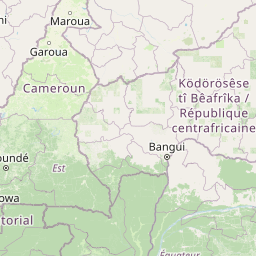
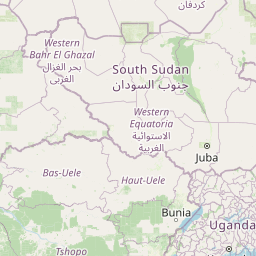
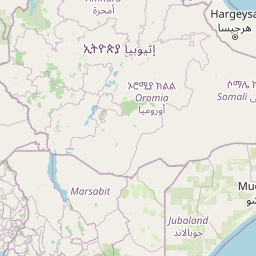
© OpenStreetMap contributors (ODbL)

Who is fighting
The current political crisis stands between President Salva Kiir's SPLM party and the government army on one side and the SPLM-IO opposition and its forces, linked to the former First Vice President Riek Machar, on the other, on top of local conflicts between communities. The UN Mission in South Sudan, UNMISS, reported on 26 March 2025 that Machar had been detained, and called on the parties to uphold the 2018 Revitalized Peace Agreement. On 22 September 2026 the Transitional Government of National Unity was dissolved and replaced by a caretaker administration. On 10 November 2026, the UNMISS head, Anita Kiki Gbeho, told the Security Council that the government maintains that the steps are intended to pave the way for elections on 22 December, while the SPLM-IO has made Machar's release a prerequisite for taking part in dialogue.
From December 2025, fighting flared in Jonglei and Upper Nile. Akobo became an epicentre. WFP describes armed men entering Akobo, setting houses on fire and attacking civilians, and intercommunal violence also driving people from villages such as Walgak. In November 2026, Gbeho said that armed confrontations between the principal signatories had generally declined, but that confrontations between government- and opposition-aligned local forces in Jonglei continue to threaten civilians, and that communal violence is the main source of civilian casualties this year.
The government presents its steps as an attempt to hold elections and carry the transition forward. The opposition demands Machar's release before it enters dialogue. WFP and the other UN agencies call on all parties to halt hostilities and allow unimpeded access for assistance.
Background
South Sudan became independent in 2011. In December 2013, civil war broke out between forces loyal to Kiir and forces linked to Machar. The 2018 Revitalized Peace Agreement ended the nationwide war and established a unity government in which Machar became First Vice President. Implementation lagged, the transitional period was extended, and the political mistrust remained. The economy is fragile. Floods, drought and high food prices have year after year eaten into household reserves. The conflict in Sudan has at the same time sent returnees and refugees across the border and put extra pressure on markets and services. Since April 2023, 1,392,350 people have fled from Sudan into South Sudan, according to the UN refugee agency (UNHCR) and the South Sudanese authorities as of 2 November 2026: 470,178 Sudanese refugees, 4,620 refugees of other nationalities, and 917,552 South Sudanese who returned home.
In June 2026, WFP met the pregnant Chol in Akobo. Her husband had been killed, the house burned. She fled with the children, fell ill from hunger and thirst in the bush and crossed temporarily into Ethiopia's Gambella region before returning to the burned house. "This is our reality," she said. "We have no power." She recalled that the fighters beat children and told them to leave, "but the children did not know where to go." Another mother, Nyaruai, lost a son while the family was fleeing intercommunal violence in Walgak. They hid for weeks in the bush and lived on wild fruit before they reached assistance. "The food we got yesterday brought us back to life," she told WFP.
The situation now
IPC estimated that 7.8 million people – more than live in Denmark (6.0 million) and 55–56 percent of South Sudan's population – were in food crisis or worse between April and July 2026. That was 280,000 more than in the analysis of September 2025. 2.5 million were in a hunger emergency, and about 73,000 – roughly as many as live in Sønderborg Municipality (73,874) – were in catastrophe (IPC Phase 5). According to FAO, WFP and UNICEF, the figure in catastrophe had risen by 160 percent. At the same time, 2.2 million children needed treatment for acute malnutrition, and 1.2 million pregnant and breastfeeding women were malnourished. Ten counties were in the most severe malnutrition phase.
The mechanism is that the fighting cuts people off from fields, markets and clinics. When houses burn and families hide in the bush, both crops and income disappear. Rain turns roads to mud and blocks supply routes. Diseases such as cholera, malaria and measles hit children who are already weakened. Where assistance cannot get through, or rations are cut, more households slip from food crisis to hunger emergency. IPC identified a risk of famine in Luakpiny/Nasir, Ulang, Nyirol and Akobo if the fighting flares again, more people are driven to flee, and access to assistance is reduced. In Akobo, the analysis also pointed out that a possible return of up to 100,000 South Sudanese from Gambella could overburden already worn-down resources.
What to watch
The April–July lean season is over, but FEWS NET assessed in the autumn that a hunger emergency and a risk of famine may persist into January 2027, driven by conflict, drought and a weak economy. The four counties at risk of famine, whether fighting in Jonglei and Upper Nile flares again, and whether the roads remain open for assistance in the dry season, are the nearest turning points. A new IPC round after the harvest will show whether the figure in catastrophe has fallen, or whether it has spread. The elections, which the government maintains will be held on 22 December 2026, and whether Machar remains detained, are the nearest political turning points.
Related items


The figures
| What | Figure | Period | As of | Source | Confidence |
|---|---|---|---|---|---|
| In catastrophe/famine (IPC 5)The IPC snapshot writes about 73,000 people in catastrophe, where people starve and die, in Akobo, Fangak, Nyirol and Uror in Jonglei, and in Luakpiny/Nasir and Ulang in Upper Nile. FAO, WFP and UNICEF cite 73,300. | 73,000 | April–July 2026 | IPC | Verified | |
| In emergency or worse (IPC 4+)2.5 million in hunger emergency plus about 73,000 in catastrophe. | 2.6 million | April–July 2026 | IPC | Estimate | |
| In food crisis or worse (IPC 3+)55–56 percent of the population, 280,000 more than in the IPC analysis from September 2025. | 7.8 million | April–July 2026 | IPC | Verified | |
| Famine officially classified | No | April–July 2026 | IPC | Verified | |
| IPC alert of a risk of famineA risk of famine is identified in Luakpiny/Nasir and Ulang (Upper Nile) and in Nyirol and Akobo (Jonglei) under a credible worst-case scenario of renewed fighting, further displacement and constrained humanitarian access. That is four counties, compared with one in the previous analysis. | Yes | risk in four counties through July 2026, maintained by FEWS NET into January 2027 | IPC | Verified | |
| Newly displaced, last 12 monthsThe figure covers only Jonglei and is therefore a floor for the country. The period is shorter than 12 months. FAO, WFP and UNICEF write "almost 300,000" in Jonglei. | 280,000 | in Jonglei after fighting from December 2025 to April 2026 | IPC | Estimate |
All figures are minimums, not totals: documented cases are fewest exactly where access is worst. Grey rows are background and do not affect the placement.
Sources
- IPC, South Sudan, acute food insecurity and malnutrition, April–July 2026 (28 April 2026)
- FAO, WFP and UNICEF, joint statement on South Sudan, 28 April 2026
- WFP, field account from Jonglei on Chol and Nyaruai, 3 June 2026
- FEWS NET, South Sudan Key Message Update, September 2026–January 2027
- Statistics Denmark, FOLK1A, population as of 1 July 2026
- UNMISS call to uphold the peace agreement after the detention of Riek Machar, 26 March 2025
- UN Commission on Human Rights in South Sudan, alert on the crisis, 27 March 2025
- Anita Kiki Gbeho, UNMISS, briefing to the UN Security Council, 10 November 2026
- UNHCR, Sudan Situation Map Weekly Regional Update, 2 November 2026
- OCHA, South Sudan Humanitarian Snapshot, September 2025
Changelog
- Headline clarified to name the subject
- The figure for people in a hunger emergency or worse is set to confidence estimate, because it is a sum of rounded IPC figures. Maps that show figures now link to the report the figures come from. A location and coordinates have been added so the site can show a small locator map.
- Technical terms such as IPC Phase 4 replaced with plain language in the reader-facing text. Linked to sudan via the related field, with UNHCR's figure for flight from Sudan into South Sudan since April 2023.
- The coverage fields are omitted because a uniform article count could not be completed for every item. Body revised for bias by omission: the 2018 Revitalized Peace Agreement, the detention of Riek Machar in March 2025, and the dissolution of the unity government in September 2026, attributed to UNMISS.
- Item created on the basis of IPC, FAO, WFP, UNICEF and FEWS NET.