Nigeria: 2.1 million people in a hunger emergency
Nigeria · Borno
- in hunger catastrophe
- 10,300June–August 2026
- in hunger emergency
- 2.1 millionJune–August 2026
- displaced
- 3.7 millionearly August 2026
Last reviewed · Last changed
Researched and written with AI · Method
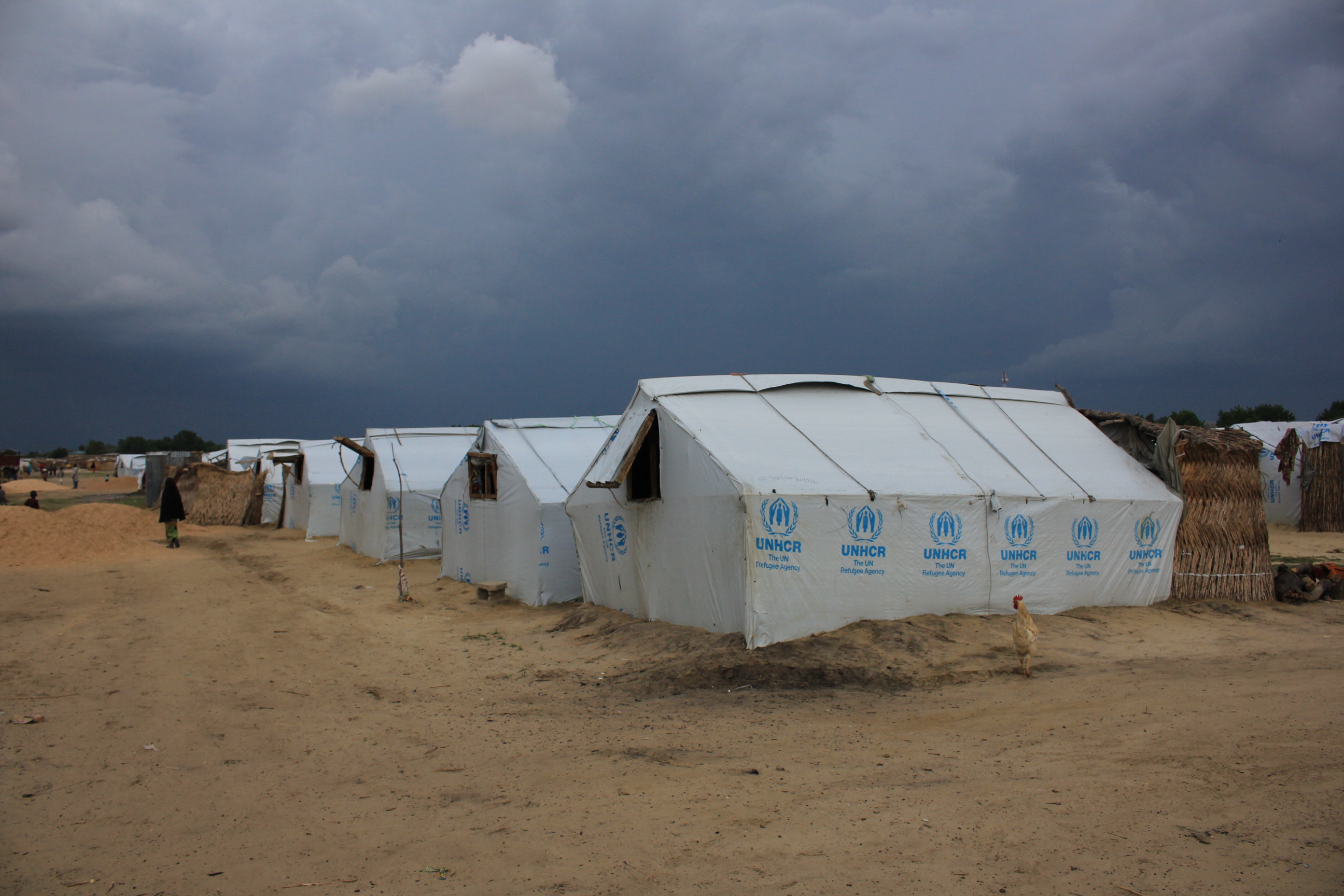
In the June–August 2026 lean season, about 2.1 million people in Nigeria were in a hunger emergency, where families skip meals and children die of malnutrition, and approximately 10,300 were in catastrophe, where people starve and die (Cadre Harmonisé Phases 4 and 5, as reported by FAO GIEWS). 2.1 million is more than three times the population of Copenhagen (670,389 on 1 July 2026, Statistics Denmark, FOLK1A).
The figures are minimums from different sources and periods — see the table below.
© OpenStreetMap contributors (ODbL)
Who is fighting
FAO writes that conflict in 2026 severely disrupted farming in Benue, Borno, Kaduna, Katsina, Niger, Plateau, Sokoto and Zamfara, and that attacks by non-state armed groups cut access to farmland. Between January and August a high level of violence was reported in the north-east, north-central and north-west, where livelihoods and markets were hit. In the local government areas of Abadam, Bama, Guzamala and Marte in Borno, movement restrictions still impede access to farmland, grazing and markets and hamper aid.
Background
Nigeria holds several conflicts at once, and hunger is worsened by inflation and an uneven harvest. FAO points to dry spells in parts of the Middle Belt and in Borno, Yobe, Kebbi, Sokoto, Bauchi, Gombe and Plateau, among other states, which raise the risk of local production shortfalls, while weather forecasts also warn of localised flooding.
The situation now
Nearly 36.3 million people — 17 per cent of the analysed population — were in a food crisis or worse in June–August 2026, up from more than 30.6 million in the same period of 2025. FAO attributes the deterioration mainly to escalating conflict and economic strain. In early August more than 3.7 million people were internally displaced; about two-thirds were living in Borno, where needs are greatest and where some of the 10,300 people in catastrophe were. A cholera outbreak in Borno has further burdened affected households. Inflation has, according to FAO, eroded poor households’ purchasing power, even where daily wages have been broadly unchanged.
Why we cannot see the full picture
Lack of access is itself a warning sign: when aid workers and observers cannot reach an area, the worst-hit people may suffer without being counted. FAO writes that conflict in 2026 severely disrupted farming in Benue, Borno, Kaduna, Katsina, Niger, Plateau, Sokoto and Zamfara, and that attacks by non-state armed groups cut access to farmland. In the local government areas of Abadam, Bama, Guzamala and Marte in Borno, movement restrictions still impede access to farmland, grazing and markets and hamper aid.
What to watch
The next Cadre Harmonisé analysis after the lean season, which will show whether the figures fall after the harvest. Whether movement restrictions in the four Borno local government areas ease, so that fields and aid can be reached. Whether the cholera outbreak in Borno is brought under control.
Related items


The figures
| What | Figure | Period | As of | Source | Confidence |
|---|---|---|---|---|---|
| In emergency or worse (IPC 4+)FAO GIEWS cites the latest Cadre Harmonisé analysis with “about 2.1 million” people in a hunger emergency and approximately 10,300 in catastrophe. 2,100,000 plus 10,300 is used as the combined figure. The underlying CH report was not retrieved as a standalone document in this sweep; the figure is cited from GIEWS’s account. | 2.1 million | June–August 2026 | FAO GIEWS | Estimate | |
| In catastrophe/famine (IPC 5)“Approximately 10 300” people in catastrophe, according to GIEWS’s account of the CH. Some of them were in Borno. | 10,300 | June–August 2026 | FAO GIEWS | Estimate | |
| In food crisis or worse (IPC 3+)“Nearly 36.3 million”, 17 per cent of the analysed population, in a food crisis or worse. This is a deterioration from more than 30.6 million in the same period of 2025. | 36.3 million | June–August 2026 | FAO GIEWS | Estimate | |
| Displaced (internally + refugees)Over 3.7 million internally displaced people nationwide; about two-thirds in Borno. | 3.7 million | early August 2026 | FAO GIEWS | Estimate | |
| Famine officially classifiedGIEWS reports people in catastrophe, not an area classification of famine. | No | June–August 2026 | FAO GIEWS | Estimate | |
| IPC alert of a risk of famineNo official CH or IPC famine-risk alert was found in the public sources used for this sweep. | No | June–August 2026 | FAO GIEWS | Cannot be verified |
All figures are minimums, not totals: documented cases are fewest exactly where access is worst. Grey rows are background and do not affect the placement.
Sources
Changelog
- Headline clarified to name the subject
- Image added: a camp for internally displaced people in Maiduguri, 2 August 2018 (CC BY-SA 4.0, Ifeatu Nnaobi). The date is stated in the caption.
- The warning on lack of access has been rewritten so that it opens by stating that lack of access is itself a warning sign, followed by the source's specifics.
- Reviewed for openly licensed images; none were added, because the camp photographs found were from 2018. Rounded hunger figures (about 2.1 million) are marked as estimates.
- Item created.