Malaria eliminated in three countries
Georgia · Suriname · Timor-Leste
No reliable figures yet.
Last reviewed · Last changed
Researched and written with AI · Method

In 2025 the World Health Organization certified three countries as malaria-free: Georgia on 23 January, Suriname on 30 June and Timor-Leste on 24 July. Certification requires a country to show that the domestic chain of transmission – infection acquired inside the country, not brought in by travellers – has been interrupted for at least three consecutive years, and that a system is in place to stop the disease from returning. After Timor-Leste, WHO had 47 countries and one territory on the list. The global picture, and the long-term fall and later stall in cases and deaths, is told in the related item on malaria.
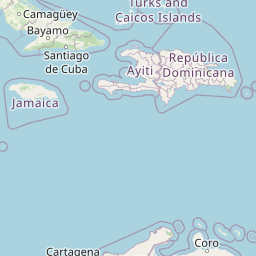
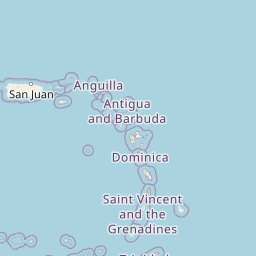


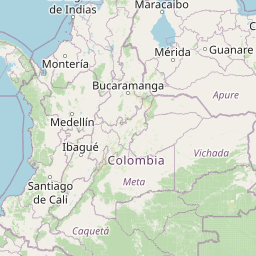
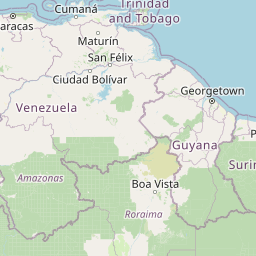


© OpenStreetMap contributors (ODbL)
What it means
In the three countries, local transmission has been interrupted. Suriname's Minister of Health, Amar Ramadhin, said the population is no longer at risk from malaria, and that the status has to be maintained so the disease does not return. Jarbas Barbosa, Director of the Pan American Health Organization, PAHO, said future generations can grow up free from this potentially deadly disease. The price is lasting vigilance at the borders and in the places where the mosquito can still live.
Georgia
Georgia was certified on 23 January 2025, after nearly a century of effort. In the 1920s an estimated almost one in three of the population was affected, predominantly by the parasite Plasmodium vivax. Large-scale mosquito control and better access to testing and treatment brought cases down by 1940, but the Second World War sent transmission up again. In the decades after the war, Georgia interrupted transmission of P. falciparum by 1953, P. malariae by 1960 and P. vivax by 1970. The country then remained malaria-free for a quarter of a century. In 2002 transmission returned, with 474 cases reported. In 2005 Georgia signed the Tashkent Declaration with nine other countries in the WHO European Region. The last indigenous case was detected in 2009. By 2015 the entire region, including Georgia, reported zero indigenous cases.
WHO Director-General Tedros Adhanom Ghebreyesus said: "Today we congratulate the people of Georgia for their decades of targeted and sustained actions to eliminate malaria, one of the world's leading killers." Health Minister Mikheil Sarjveladze said the certification is a recognition of the sustainability of the healthcare system, and that Georgia can address important health challenges. Hans Henri P. Kluge, WHO Regional Director for Europe, pointed to sustained investment, a dedicated health workforce, and targeted prevention, early detection and effective treatment.
Suriname
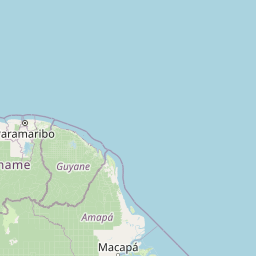
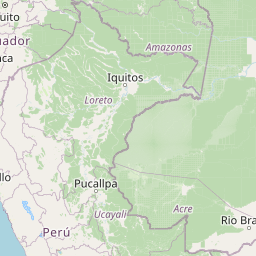
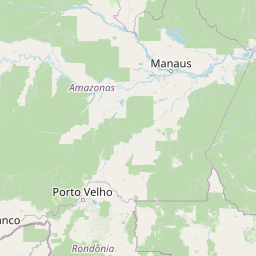
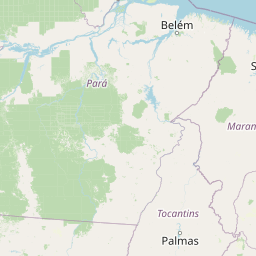
On 30 June 2025 Suriname became the first country in the Amazon region to receive WHO malaria-free certification, after nearly 70 years of effort. About 90 percent of the country is rainforest, and people move across borders, including in connection with gold mining. Control work began in the 1950s in the coastal region, which has been malaria-free since 1968. Transmission persisted in the interior, and in 2001 it peaked at more than 15,000 cases, the highest level then reported in the Americas. Between 2000 and 2015 indigenous cases fell from 11,361 to 81.
The breakthrough came when the country reached people in remote mining areas. Suriname built a network of workers recruited from the mining communities, who provided free testing, treatment and prevention, including to people without legal status. There was screening at border crossings, and cooperation with Brazil and French Guiana. The last locally transmitted P. falciparum case was reported in 2018, and the last P. vivax case in 2021.
Tedros said the certification is a powerful affirmation that everyone – regardless of nationality, background or migration status – deserves access to malaria diagnosis and treatment, and that Suriname's commitment to health equity serves as an inspiration. Barbosa said Suriname did what was needed: detecting and treating every case quickly, investigating to prevent spread, and engaging communities, including in remote areas.
Timor-Leste
Timor-Leste was certified on 24 July 2025, the third country in the WHO South-East Asia Region after the Maldives in 2015 and Sri Lanka in 2016. It was the country's second disease elimination in under two years, after lymphatic filariasis-free certification in 2024.
The World malaria report 2025 says cases fell from 177,890 in 2006 to zero indigenous cases from 2021 onwards. WHO's certification announcement describes a peak of over 223,000 in 2006. Both figures are WHO's; the report is the later, comprehensive account. The country established its national malaria programme in 2003, shortly after independence, and in 2007 introduced rapid blood tests and artemisinin-based combination treatment, while distributing free mosquito nets to the most at-risk communities. In 2009, with support from the Global Fund, the effort was scaled up nationwide with nets and indoor spraying, and testing was made available at all local health posts. A three-tier health system was built – national hospital, closer hospitals and local posts – with free care, and mobile clinics reached remote villages.
Prime Minister Kay Rala Xanana Gusmão called it a moment of immense national pride and said: "For over 20 years, we fought village by village, family by family. This victory belongs to our fearless health workers and every household that chose prevention." Tedros said Timor-Leste's success proves that malaria can be stopped when strong political will, smart interventions, sustained investment and dedicated health workers unite. Health Minister Élia dos Reis Amaral said too many lives had been lost to a disease that should be preventable, and called for continued vigilance so that transmission does not return.
The response
WHO grants certification when a country has proved, beyond reasonable doubt, that the chain of indigenous transmission has been interrupted nationwide for at least the previous three consecutive years, and that surveillance and response are in place. In Georgia, WHO pointed to sustained investment, early detection and treatment. In Suriname, PAHO pointed to detecting and treating every case quickly, investigating to prevent spread, and reaching remote areas, including among people who had come from elsewhere. In Timor-Leste, WHO pointed to testing, treatment and swift investigation, and to a national programme set up a few years after independence. The effect – that transmission has been interrupted – comes from WHO's certification, not from the organisations' own activity counts.
What to watch
Will the three countries keep transmission down, or will it return across their borders? Will there be new certifications in 2026? The World malaria report 2025 says that by the end of 2024 Bhutan, Saudi Arabia and Malaysia had gone at least three years without indigenous transmission of the human malaria parasites but had not yet applied for certification, and that Türkiye has submitted an application. The global picture of cases and deaths is followed in the related item on malaria.
Related items


The figures
There are no sourced figures for this item yet.
Sources
- WHO, Georgia certified malaria-free by WHO, 23 January 2025
- WHO, Suriname certified malaria-free by WHO, 30 June 2025
- WHO, Timor-Leste certified malaria-free by WHO, 24 July 2025
- WHO Timor-Leste, Timor-Leste certified malaria-free by WHO, 24 July 2025
- WHO, Countries and territories certified malaria-free by WHO
- WHO, World malaria report 2025
- WHO, World malaria report 2025, the publication, 4 December 2025
Changelog
- The photograph of the Presidential Palace in Paramaribo has been replaced, because it did not show the health work in the item. In its place: patients waiting at Brownsweg Hospital in Paramaribo, 14 July 2025 (public domain, U.S. Air Force, Tech. Sgt. Elora McCutcheon).
- Image added: the Presidential Palace in Paramaribo, 17 March 2012 (CC BY 2.0, Ian Mackenzie, derivative work by MrPanyGoff).
- Item created from WHO malaria-free certifications of Georgia, Suriname and Timor-Leste in 2025.
- Global case and death figures have been removed; the item now covers only the certified countries and points to malaria for the global picture. Jack's decision of 10 November 2026.