Child mortality down from one in eleven to one in twenty-seven
World
No reliable figures yet.
Last reviewed · Last changed
Researched and written with AI · Method
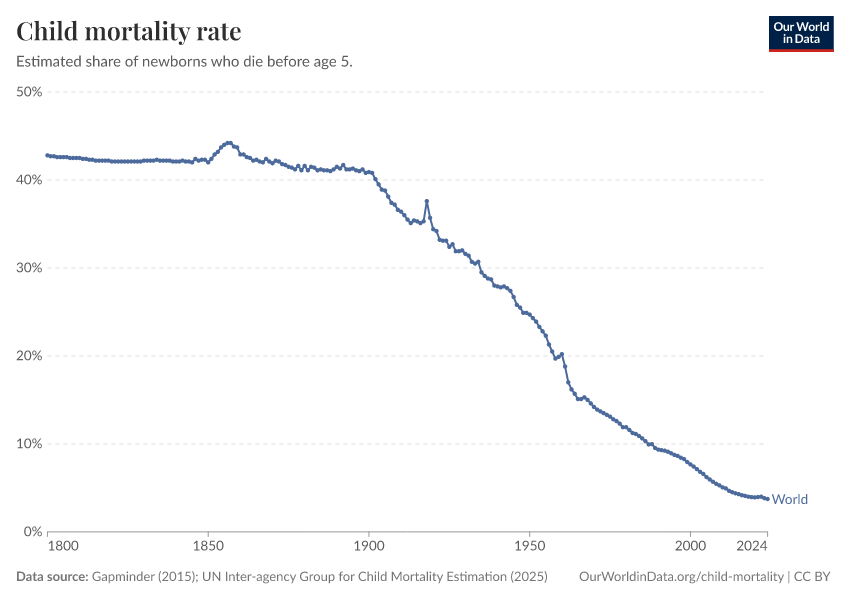
In 1990 about one in eleven children died before the age of five. In 2024 it was about one in twenty-seven. The mortality rate fell from 93.5 to 37.4 deaths per 1,000 live births, a 60 percent decline, according to the UN's official UN IGME estimates in the Levels and Trends in Child Mortality report, published in March 2026. The number of deaths fell from an estimated 13.0 million in 1990 to 4.9 million in 2024 — nearly two-thirds fewer. That is about 8.1 million fewer deaths a year, more than Denmark's population of 6,031,699 on 1 July 2026.
UNICEF writes that the world has made remarkable progress since 1990, and that the fall of about 60 percent in the under-five mortality rate, and 45 percent in newborn deaths, has saved millions of young lives. Almost nobody knows that story, while the 2024 figure — 4.9 million — stands alone. The current burden, and the slowdown since 2015, is set out in the related item on child mortality in the world.
The response
UNICEF writes that the gains reflect decades of investment in immunization, essential health services, newborn care, nutrition support and the integrated management of childhood illnesses. The WHO press release points to the same kind of proven, low-cost interventions: vaccines, treatment for severe acute malnutrition, and skilled care at birth. The report writes that newborn deaths can be reduced above all through quality antenatal, intrapartum and postnatal care, including skilled birth attendance, essential newborn care, and dedicated support for small and sick newborns. It does not itself estimate how much of the fall each intervention contributed.
Since 2000 the number of under-five deaths has fallen by more than half, from an estimated 10.1 million. But since 2015 the pace of reduction has slowed by more than 60 percent, according to WHO, UNICEF and the World Bank. Progress is also uneven. In 2024 sub-Saharan Africa accounted for 58 percent of the deaths, and Southern Asia for 25 percent. The report writes that where targeted investments have been made, child mortality has fallen sharply, while in fragile or under-resourced health systems progress has been slow or has stalled. Unless the pace is raised, the estimate points to 27.3 million under-five deaths between 2025 and 2030.
Where and who
The deaths are concentrated, but the fall is global. UN IGME's figures cover all regions on the same definition: the probability of dying between birth and exactly five years of age, expressed per 1,000 live births, and the corresponding number of deaths. Years can therefore be compared directly. The World Bank series, which is based on the same estimates, gives 12,970,030 deaths in 1990 and 4,857,797 in 2024; the report's rounded figures are 13.0 and 4.9 million.
The related item on malaria-free countries shows that individual countries have eliminated one of the diseases that still kill most children after the first month. That does not change the global total, but it shows that proven interventions can take a country all the way out of a disease.
What to watch
Will the decline hold, or is the slowdown since 2015 turning into a standstill? Will the share of deaths shift further towards sub-Saharan Africa and Southern Asia? And will the proven interventions that UNICEF and WHO themselves name be scaled up where most children still die?
Related items


The figures
There are no sourced figures for this item yet.
Sources
- UNICEF, Levels and Trends in Child Mortality 2025
- WHO, UNICEF, UN IGME and the World Bank, press release on Levels and Trends in Child Mortality, 18 March 2026
- World Bank, Mortality rate, under-5 (per 1,000 live births), UN IGME
- World Bank, Number of under-five deaths, UN IGME
- Statistics Denmark, FOLK1A, population 1 July 2026
Changelog
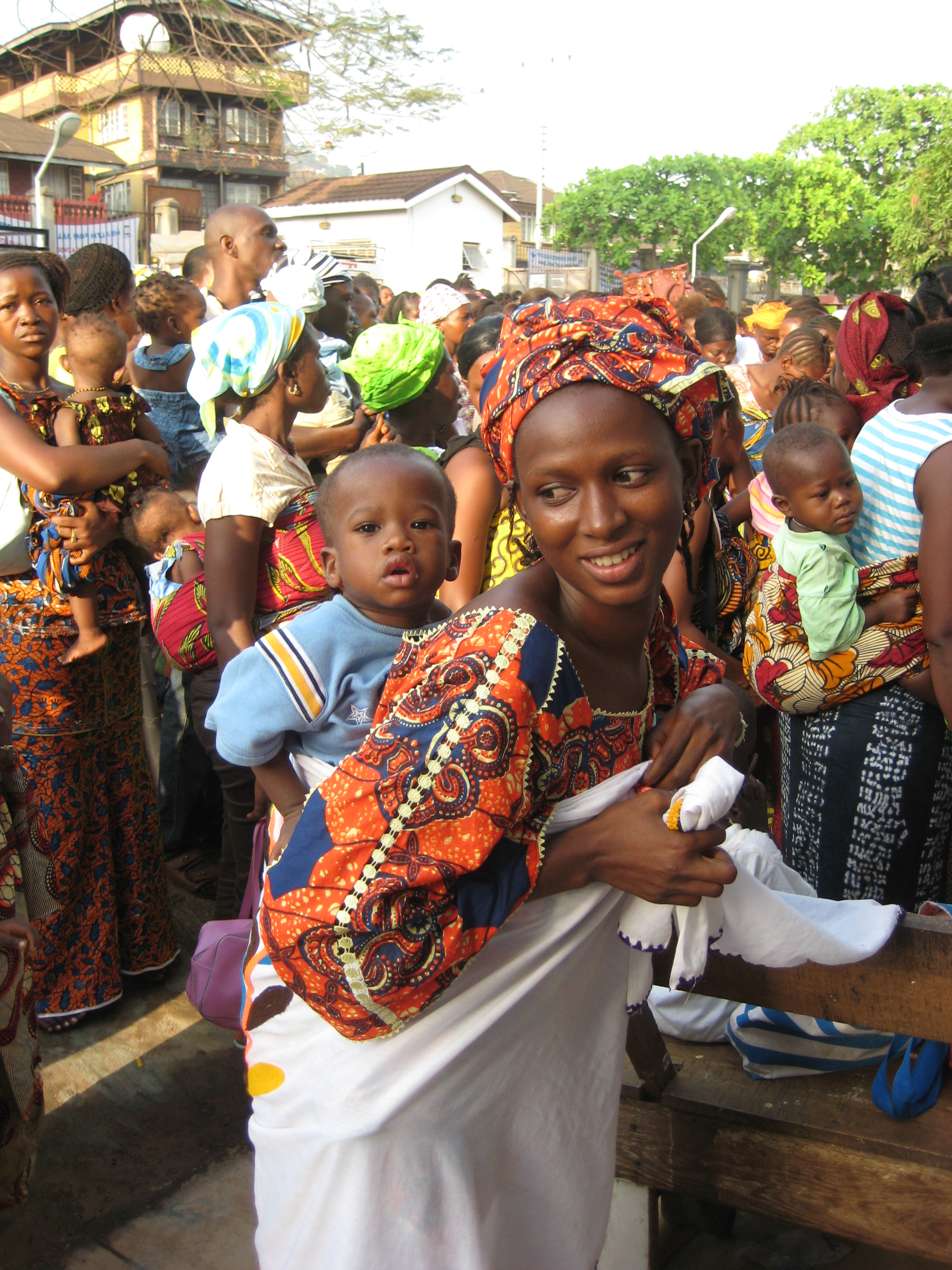
- Photo added at the top: a mother and her child queuing at a children's hospital in Sierra Leone on the day the country introduced free healthcare for children under five, 2010 (CC BY 2.0, Robert Yates / DFID). The chart of global child mortality is now the second image.
- Headline clarified to name the subject
- review_log corrected to tier none. The existing 10 November line was not a genuine review at tier 1: the item has no deaths_12m, pheic or who_grade, so the epidemier criteria compute no tier. No tier is intended. status remains active because the item is positive.
- Image added: Our World in Data chart of the global child mortality rate since 1800 (CC BY 4.0, data from Gapminder 2015 and UN IGME 2025).
- Positive item created on the fall in under-five deaths from 1990 to 2024, following Jack's correction of 10 November 2026.