Somalia: 1.5 million expected in a hunger emergency
Somalia · Bay · Baidoa
- in hunger catastrophe
- 26,000October–December 2026
- in hunger emergency
- 1.5 millionOctober–December 2026
- in food crisis
- 5.4 millionOctober–December 2026
Last reviewed · Last changed
Researched and written with AI · Method
From October to December 2026, 1.5 million people in Somalia are expected to be in a hunger emergency, where families skip meals and children die of malnutrition (IPC Phase 4), and close to 26,000 internally displaced people in Baidoa in catastrophe, where people starve and die. 1.5 million is more than the combined population of Copenhagen and Aarhus (1,048,659 on 1 July 2026, Statistics Denmark, FOLK1A). For the second consecutive analysis, IPC points to a risk of famine among the displaced people in Baidoa.
The figures are minimums from different sources and periods — see the table below.
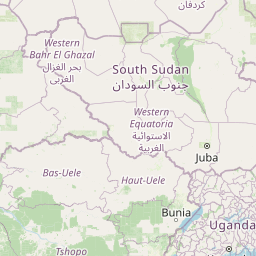
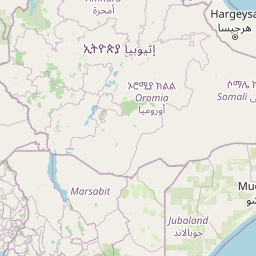
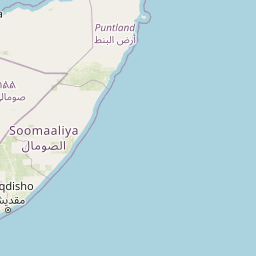

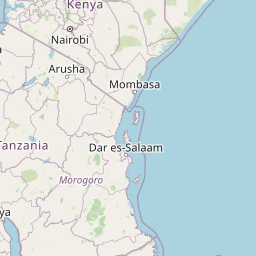
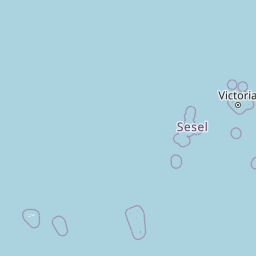

© OpenStreetMap contributors (ODbL)

Who is fighting
Conflict and insecurity continue in large parts of central and southern Somalia and in more localised areas in the north, IPC writes. This displaces people, cuts access to markets and livelihoods and constrains aid. An earlier analysis in 2026 pointed to insurgency, clan-based competition over resources, territorial disputes and political tension between the centre and the periphery.
Background
Hunger in Somalia comes in waves with rain, drought and conflict. The 2026 Gu rains were weak in pastoral areas. After-effects of drought from mid-2025 to early 2026 have kept milk availability low. IPC also expects floods to displace nearly 198,000 people between October and December. Earlier in 2026, in February–March, about 2.03 million people were in a hunger emergency — a higher peak than the current period, which has since been superseded by the July analysis.
The situation now
In October–December 2026, 5.4 million people are expected to be in a food crisis or worse, six per cent more than in July–September, when the figure was about 5.1 million and around 1.4 million were in a hunger emergency. Response capacity has, according to the snapshot, declined sharply since January 2026. Acute malnutrition has also worsened: about 1.92 million children aged 6–59 months are expected to suffer from it from July 2026 to June 2027, four per cent more than in 2025. IPC writes that the displaced people in Baidoa face a risk of famine if an integrated response and anticipatory action are not delivered, while heavy rain and flooding are also forecast.
Why we cannot see the full picture
Lack of access is itself a warning sign: when aid workers and observers cannot reach an area, the worst-hit people may suffer without being counted. IPC writes that conflict and insecurity continue in large parts of central and southern Somalia and in more localised areas in the north. This displaces people, cuts access to markets and livelihoods and constrains aid.
What to watch
Whether a new IPC analysis maintains or raises the famine risk in Baidoa, and whether the number in catastrophe rises. Whether the Deyr rains bring the forecast floods, or drought in pastoral areas. Whether food assistance, which has been cut since January, is scaled up in time.
Related items


The figures
| What | Figure | Period | As of | Source | Confidence |
|---|---|---|---|---|---|
| In emergency or worse (IPC 4+)The snapshot says 1.5 million people will be in a hunger emergency and close to 26,000 internally displaced people in Baidoa will be in catastrophe. 1,500,000 plus 26,000 is used as the combined figure. In July–September 2026 about 1.4 million were in a hunger emergency. An earlier analysis had a higher peak of about 2.03 million in February–March 2026. | 1.5 million | October–December 2026 | IPC | Estimate | |
| In catastrophe/famine (IPC 5)“Close to 26,000” internally displaced people in the Bay region, in Baidoa. | 26,000 | October–December 2026 | IPC | Estimate | |
| In food crisis or worse (IPC 3+)A six per cent increase on the preceding period in the same snapshot. In July–September the figure was estimated at 5.1 million. | 5.4 million | October–December 2026 | IPC | Estimate | |
| Famine officially classifiedNo area is classified as famine. The 26,000 people in Baidoa are in catastrophe, not in an area classification of famine. | No | July–December 2026 | IPC | Verified | |
| IPC alert of a risk of famineThe second consecutive analysis in which IPC identifies a risk of famine among internally displaced people in Baidoa. | Yes | October–December 2026, internally displaced people in Baidoa | IPC | Verified |
All figures are minimums, not totals: documented cases are fewest exactly where access is worst. Grey rows are background and do not affect the placement.
Sources
Changelog
- Headline clarified to name the subject
- The warning on lack of access has been rewritten so that it opens by stating that lack of access is itself a warning sign, followed by the source's specifics.
- Added an EU map of the complex emergency dated 12 May 2026.
- Item created.