DR Congo: more than 3.6 million in a hunger emergency
DR Congo · North Kivu · South Kivu · Ituri · Tanganyika
- in hunger emergency
- 3.6 millionJanuary–June 2026
- displaced
- 4.3 millionstock at the end of 2025
- newly displaced
- 9.7 million2025
Last reviewed · Last changed
Researched and written with AI · Method

More than 3.6 million people in the Democratic Republic of the Congo were in a hunger emergency, where families skip meals and children die of malnutrition (IPC Phase 4), in the first half of 2026. That is already a very large number; all those in a food crisis or worse — 26.5 million — outnumber Denmark’s entire population (6,031,699 on 1 July 2026, Statistics Denmark, FOLK1A).
The figures are minimums from different sources and periods — see the table below.
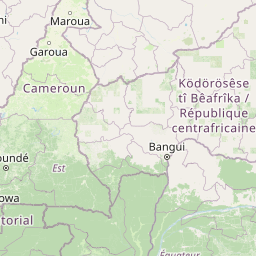
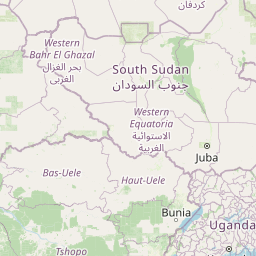
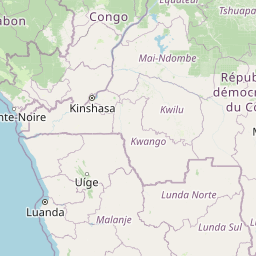
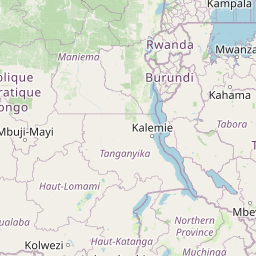
© OpenStreetMap contributors (ODbL)
Who is fighting
In the east, the March 23 Movement (M23) took the provincial capitals Goma in North Kivu and Bukavu in South Kivu in 2025 and, according to IDMC, became the de facto authorities in large areas. After a six-month ceasefire, attacks in North Kivu escalated in the first two months of the year; M23 took Masisi and Sake and then Goma and Nyiragongo, which at the end of 2024 were hosting more than 714,000 internally displaced people. By mid-February the group had entered Kalehe and Uvira and captured Bukavu. In March the island of Idjwi, long regarded as a demilitarised refuge, fell. IDMC also describes later waves in July, October and December. IPC’s update for January–June 2026 points to continued armed conflict, insecurity and new displacement, with some easing of clashes in North Kivu and Tanganyika and an increase in South Kivu. Other armed groups also operate in the east.
Background
2025 was, according to IDMC, a turning point. Over 9.7 million conflict displacements were recorded, nearly twice as many as the already record year 2024. Almost 2.3 million occurred in January and February, and more than two million more in October and December. M23 dismantled most displacement sites, and the number of people living in displacement as a result of conflict fell from 6.2 million to 4.3 million — not because conditions had become safe, IDMC writes, but because hundreds of thousands were forced back. Many returned to destroyed or occupied homes, with tenure documents lost, and to roads and fields under the control of armed groups.
The situation now
Nationwide, IPC estimates that 26.5 million people — 23 per cent of the analysed population — were in a food crisis or worse from January to June 2026, including more than 3.6 million in a hunger emergency. In North Kivu, South Kivu, Ituri and Tanganyika alone, more than 9.9 million were expected to face that situation. The fighting hit farming, markets and aid deliveries. When Goma and Bukavu fell, assistance largely run out of Goma was disrupted; aid facilities, hospitals and schools were looted, damaged or destroyed, and airports and banks were seized. Destroyed health and water infrastructure and overcrowding in host families contributed to a cholera outbreak that, according to IDMC, surpassed 2024.
What to watch
A new IPC analysis after June 2026, which may show whether hunger in South Kivu has risen further. Whether the forced returns become durable, voluntary solutions, or whether new offensives tear people loose again. Humanitarian access to areas under M23 and other groups.
Related items


The figures
| What | Figure | Period | As of | Source | Confidence |
|---|---|---|---|---|---|
| In emergency or worse (IPC 4+)The snapshot says “more than 3.6 million” people were in a hunger emergency. No exact figure is given, so 3,600,000 is used as a floor. No famine is classified in the snapshot. | 3.6 million | January–June 2026 | IPC | Estimate | |
| In food crisis or worse (IPC 3+)About 23 per cent of the analysed population, including more than 3.6 million in a hunger emergency and 22.9 million in a food crisis. | 26.5 million | January–June 2026 | IPC | Estimate | |
| Newly displaced, last 12 monthsConflict displacements in calendar year 2025, the highest IDMC has recorded in the country and nearly twice as many as in 2024. The figure is not November 2025–November 2026. | 9.7 million | 2025 | IDMC | Verified | |
| Displaced (internally + refugees)The fall from 6.2 million is, according to IDMC, the result of forced returns, not an easing of the crisis. M23 dismantled most displacement sites in Goma and Nyiragongo. | 4.3 million | stock at the end of 2025 | IDMC | Verified | |
| Famine officially classified | No | January–June 2026 | IPC | Verified | |
| IPC alert of a risk of famine | No | January–June 2026 | IPC | Verified |
All figures are minimums, not totals: documented cases are fewest exactly where access is worst. Grey rows are background and do not affect the placement.
Sources
Changelog
- Headline clarified to name the subject
- Image added: the Kanyaruchinya camp near Goma, 11 December 2024 (CC0, Sunway godianne).
- Reviewed for openly licensed images; none were added, because the photos found were military patrols or did not show the crisis. The hunger figure of more than 3.6 million, and the combined figure that builds on it, are marked as estimates.
- Item created.