Yemen: 1.6 million in hunger emergency in government-controlled areas
Yemen
- in hunger emergency
- 1.6 millionJune–September 2026, government-controlled areas only
- in food crisis
- 5.4 millionJune–September 2026, at the same level for October–December 2026, government-controlled areas only
Last reviewed · Last changed
Researched and written with AI · Method
In the government-controlled areas of Yemen, 1.6 million people were in a hunger emergency, where families skip meals and children die of malnutrition (IPC Phase 4), in the 2026 lean season – more than four times the population of Aarhus Municipality (378,270) – and 5.4 million, almost Denmark's entire population, still need food assistance during the harvest.
The figures are minimums from different sources and periods — see the table below.
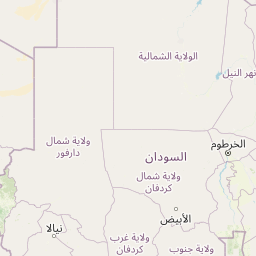
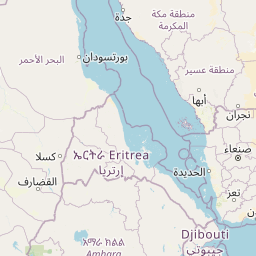
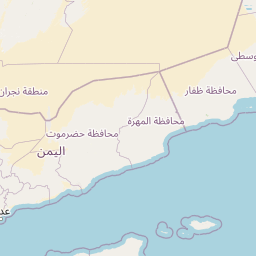

© OpenStreetMap contributors (ODbL)

Who is fighting
Yemen has been divided since the mid-2010s. The internationally recognised government and its backers control parts of the south and east. Ansar Allah, known as the Houthis, controls Sana'a and large parts of the north, where much of the population lives. In 2015 a Saudi- and UAE-led coalition intervened on the government's side with airstrikes. The UN Special Envoy, Hans Grundberg, has described the government as having been backed by a Saudi-led coalition for more than a decade.
The government presents itself as the legitimate state authority and says it will restore the state's authority over the whole country. The Houthi movement presents itself as a defender of Yemen against the foreign coalition and against a blockade.
According to the UN relief chief, Tom Fletcher, briefing the Security Council on 13 August 2026, the Houthi authorities were then holding 73 UN staff, together with workers from NGOs, civil society and diplomatic missions. Between July 2025 and July 2026, more than 200 humanitarian access incidents were recorded across the country. On 9 October 2026, Grundberg said that one UN staff member had been released, but that 72 colleagues remained detained. He also said that Yemen had slid back into full-scale war, that Ansar Allah had carried out attacks against civilian and energy infrastructure in Saudi Arabia, including Abha International Airport and King Khalid International Airport in Riyadh, in which civilians were killed and injured, and that the movement's threats against Saudi-linked commercial ships in the Red Sea undermine freedom of navigation. In September 2025 he also warned of an intensification of hostilities between Ansar Allah and Israel. According to his October briefing, aerial attacks, including airstrikes, have continued across the country. The figures on which this item is ranked cover only the government-controlled areas; the northern population is not included in the current IPC figures.
Background
Years of war, a shattered economy and a heavy dependence on imported food have left households vulnerable to price rises and a failing currency. The coalition's intervention in 2015 and fighting over ports and airports at the same time hit the entry of fuel, food and medicine; as early as April 2015, OCHA described import restrictions and fighting as severely limiting supplies. Even when the fighting is local rather than nationwide, it hits markets and transport. Humanitarian assistance has for long periods been what has kept many families just above the worst hunger. In the government-controlled areas, in February 2026, WFP cut the number of people receiving emergency food assistance from 3.4 million to 1.7 million because of severe funding shortfalls.
The situation now
IPC assessed that almost 5 million people in the government-controlled areas were in food crisis or worse in March–May 2026, of whom 1.4 million were in a hunger emergency. That was a small seasonal improvement, which the analysis itself called temporary. In the June–September lean season, 5.4 million were expected to be in food crisis or worse, of whom 1.6 million in a hunger emergency. In the October–December 2026 harvest – the period we are now in – an estimated 5.4 million remain in need of assistance. The snapshot does not report a nationwide figure for famine or catastrophe.
The mechanism here is first and foremost economic, on top of insecurity. IPC points to a worsening macroeconomy, local violence and unrest, and to the fact that the population in the areas analysed depends heavily on external assistance and on the world market. When the currency weakens, and fuel and imports rise in price, families lose purchasing power, even in the middle of a harvest. If assistance is cut, or the harvest falls short, the analysis finds there is not enough to fall back on in local livelihood systems. The detention of UN staff and the many access incidents described by Fletcher at the same time reduce the ability to reach those in need, including outside the areas covered by the IPC figures.
Why we cannot see the full picture
Lack of access is itself a warning sign: when aid workers and observers cannot reach an area, the worst-hit people may suffer without being counted. According to the UN relief chief, Tom Fletcher, briefing the Security Council on 13 August 2026, the Houthi authorities were then holding 73 UN staff, together with workers from NGOs, civil society and diplomatic missions. Between July 2025 and July 2026, more than 200 humanitarian access incidents were recorded across the country. On 9 October 2026, the UN special envoy Hans Grundberg said that 72 UN staff remained detained. The IPC figures on which this item is ranked cover only the government-controlled areas; the northern population is not included.
What to watch
The harvest period runs to the end of December 2026. The test is whether the 5.4 million are still in need when the harvest is in, and whether the next IPC round – preferably one that also covers the areas under the Sana'a authorities – shows a hunger-emergency figure above or below 1.6 million. The exchange rate, import prices and the funding of food assistance are the nearest economic turning points before the next lean season in 2027. Whether the detained UN staff are released, and whether the war Grundberg described in October spreads further, will determine whether assistance can get through at all.
Related items


The figures
| What | Figure | Period | As of | Source | Confidence |
|---|---|---|---|---|---|
| In emergency or worse (IPC 4+)The figure does not cover areas under the Sanaa authorities. For March–May 2026, 1.4 million people were in a hunger emergency. The snapshot does not repeat a separate hunger-emergency figure for October–December, when 5.4 million are still expected to need assistance. | 1.6 million | June–September 2026, government-controlled areas only | IPC | Verified | |
| In food crisis or worse (IPC 3+)In March–May 2026 the figure was almost 5 million. The analysis covers only the government-controlled areas. | 5.4 million | June–September 2026, at the same level for October–December 2026, government-controlled areas only | IPC | Verified | |
| Famine officially classifiedThe snapshot does not classify famine in the areas analysed. | No | March–December 2026, government-controlled areas | IPC | Verified | |
| IPC alert of a risk of famineThe snapshot does not issue a famine alert for the government-controlled areas. Figures for areas under the Sanaa authorities are not included in the analysis. | No | March–December 2026, government-controlled areas | IPC | Verified |
All figures are minimums, not totals: documented cases are fewest exactly where access is worst. Grey rows are background and do not affect the placement.
Sources
- IPC, Yemen (government-controlled areas), acute food insecurity, March–December 2026
- FAO and WFP, Hunger Hotspots, June–November 2026
- Statistics Denmark, FOLK1A, population as of 1 July 2026
- WFP, Yemen Food Security Update, February 2026 (published 5 March 2026)
- NRC, The World's Most Neglected Displacement Crises 2025 (4 June 2026)
- Tom Fletcher, briefing to the UN Security Council on Yemen, 13 August 2026
- Hans Grundberg, briefing to the UN Security Council, 9 October 2026
- UN News, briefing on Yemen, 15 September 2025
- OCHA, Yemen Escalating Conflict Situation Report No. 5, 26 April 2015
- ISWNews, interactive Yemen control map
Changelog
- Headline clarified to name the subject
- The warning on lack of access has been rewritten so that it opens by stating that lack of access is itself a warning sign, followed by the source's specifics.
- NRC's measured assessment of media coverage has been placed in the media_coverage field and taken out of the body, so it is not stated twice. Maps that show figures now link to the report the figures come from. A location and coordinates have been added so the site can show a small locator map.
- Technical terms such as IPC Phase 4 replaced with plain language in the reader-facing text.
- An unsourced sentence about weakened food assistance was replaced with WFP's figures for the cut from 3.4 million to 1.7 million recipients in February 2026. Process remarks were removed from the body and from notes. Body revised for bias by omission: the Houthi authorities' detention of UN staff, attacks in the Red Sea and on Saudi civilian infrastructure, the role of the Saudi-led coalition since 2015, and intensified hostilities with Israel, attributed to the UN.
- Item created on the basis of the IPC analysis for the government-controlled areas.