Earthquake in Colombia
Colombia · Chocó · Valle del Cauca · Risaralda
- dead
- 335since 10 August 2026
- affected
- 778,281in 16 departments since 10 August 2026
Last reviewed · Last changed
Researched and written with AI · Method

A magnitude 7.4 earthquake struck San José del Palmar in Chocó on 10 August 2026 and was felt across much of Colombia as well as in Ecuador, Panama and Venezuela. The national disaster-risk unit, UNGRD, recorded 335 deaths and 778,281 people affected in 16 departments as of 21 September.
© OpenStreetMap contributors (ODbL)

What happened
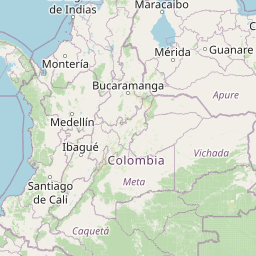
The earthquake struck at 7:34 local time, with its epicentre in the municipality of San José del Palmar in Chocó and a depth of 103 kilometres, according to the Colombian Geological Survey (SGC), which calls it the strongest earthquake recorded in Colombia in the 21st century. The shaking hit hardest in the densely populated valleys and cities of Valle del Cauca, Risaralda, Chocó, Quindío and Caldas, where houses, schools, hospitals, roads and bridges collapsed or were left uninhabitable. Search and rescue has ended. 1,849 rescuers, including four international teams, rescued 356 people and recovered 259 bodies. Aftershocks linked to the main shock have become less frequent, while a separate swarm remains active around Istmina, Medio San Juan, Sipí and El Litoral del San Juan.
Who is affected
UNGRD situation report No. 84 of 21 September recorded 778,281 people affected (326,648 families) in 500 municipalities in 16 departments, 335 deaths, 4,516 injured and 105 missing. That is about as many people affected as live in Copenhagen and Frederiksberg combined (776,336 on 1 July 2026). Valle del Cauca, Risaralda, Chocó, Quindío and Caldas account for 94 per cent of the affected families. UNGRD counted 36,478 houses destroyed and 206,931 damaged, as well as damage to 4,431 education facilities, 402 health facilities, 182 water systems, 531 roads and 133 bridges. Physical damage is estimated at 42.1 trillion Colombian pesos, around 2.3 per cent of GDP. The official register of affected people, the RUD, which governs access to national assistance, stood at almost the same population figure, but IFRC says registration is still being checked for duplicates and gaps, including where roads and networks are down.
The response
The government and the national disaster-risk system are leading the response. IFRC and the Colombian Red Cross have a 24-month emergency appeal with a secretariat ask of 10 million Swiss francs, 78.2 per cent funded as of 13 October, and a Federation-wide requirement of 25 million. The Red Cross plan aims to reach 42,900 people. The UN emergency relief coordinator early on allocated 5 million dollars from CERF. Humanitarian clusters have been activated, and IOM and other partners are supporting temporary shelters. In Quibdó, Cali, Buenaventura and other hard-hit cities there is still a need for shelter, water, health care and protection, while registration for national assistance continues.
What to watch
The seismic swarm around Istmina is still being monitored. RUD registration will decide who receives national assistance, and the figures may be revised. Rebuilding tens of thousands of homes, as well as schools, hospitals and roads, is the long task ahead. El Niño and concurrent severe weather in other parts of the country could add pressure on the same institutions now leading recovery.
The figures
| What | Figure | Period | As of | Source | Confidence |
|---|---|---|---|---|---|
| DeadUNGRD situation report No. 84 of 21 September 2026, relayed in IFRC operation update 2 of 28 October. 105 people were recorded as missing at the same time. Missing people are not included in the death toll. | 335 | since 10 August 2026 | UNGRD | Verified | |
| AffectedUNGRD situation report No. 84, relayed in IFRC operation update 2. The official RUD register recorded almost the same figure (778,279). A later UNGRD count in the same update of 486,917 is, according to IFRC, not directly comparable, because the sources are compiled in different ways. | 778,281 | in 16 departments since 10 August 2026 | UNGRD | Verified | |
| GDACS alertThe UN and EU's disaster alert system (GDACS) issued its highest warning level for the earthquake in Colombia on 10 August 2026. | Red | highest alert during the event from the UN and EU disaster alert system | GDACS | Verified |
All figures are minimums, not totals: documented cases are fewest exactly where access is worst. Grey rows are background and do not affect the placement.
Sources
- IFRC, Colombia Earthquake Operation Update No. 2 (MDRCO036), 28 October 2026
- IFRC, Colombia Earthquake Emergency Appeal (MDRCO036)
- Colombia, addendum to the humanitarian response plan, August 2026
- GDACS, Earthquake in Colombia, event 1557236
- Statistics Denmark, FOLK1A, population as of 1 July 2026
- IOM, Colombia Earthquake Response, Situation Report No. 3, 17 August 2026
Changelog
- Maps that show figures now link to the report the figures come from. A location and coordinates have been added so the site can show a small locator map.
- GDACS red alert explained as the UN and EU disaster alert system's highest warning level in the reader-facing text.
- First draft, based on UNGRD figures in IFRC operation update 2 and GDACS.