Haiti: 1.8 million people cannot obtain enough food
Haiti · Port-au-Prince
- in hunger emergency
- 1.8 millionSeptember 2026–February 2027
- displaced
- 1.5 millionstock mentioned in the IPC analysis published 28 October 2026
- in food crisis
- 5.9 millionSeptember 2026–February 2027
Last reviewed · Last changed
Researched and written with AI · Method
In Haiti, 1.8 million people cannot obtain enough food – almost as many as live in the entire Capital Region of Denmark (1,949,336) – after armed groups have cut off roads and markets and driven an estimated 1.49 million people from their homes.
The figures are minimums from different sources and periods — see the table below.

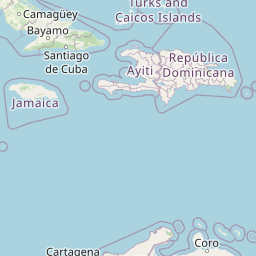
© OpenStreetMap contributors (ODbL)

Who is fighting
Haiti is not in a classic civil war between two armies. Armed groups, often described as gangs, have extended their control in Port-au-Prince and in the departments of Ouest, Artibonite and Centre. The Haitian National Police, the Haitian armed forces and the Multinational Security Support (MSS) Mission, which the UN Security Council authorised in 2023 to support the police, have tried to regain territory and protect civilians. In September 2025 the Security Council decided to replace the MSS with a Gang Suppression Force.
The state and the mission say the aim is to restore public security and the authority of the state. The armed groups do not appear in the sources used here with a single official political programme, so their aims are not stated here. IPC instead describes what their control does to food, markets and flight.
OHCHR documented that the violence does not come from the gangs alone. Between 1 March 2025 and 15 January 2026 the office recorded at least 5,519 people killed and 2,608 injured. It documented 247 cases of unnecessary or disproportionate lethal force and summary executions by the police outside anti-gang operations, resulting in 196 killings and 51 injuries. A private military company, Vectus Global, which according to OHCHR was hired by the Haitian government, began drone and helicopter operations on 1 March 2025; among the casualties in those operations were 60 people not affiliated with gangs who were killed, and 49 injured. Self-defence groups have also lynched people suspected of gang affiliation; in some cases, according to OHCHR, police officers are alleged to have encouraged or assisted.
Background
President Jovenel Moïse was assassinated in July 2021, and Haiti has since been without an elected president. A transitional arrangement from March 2024 was supposed to transfer power to elected authorities on 7 February 2026. According to OHCHR, the mandate of the Transitional Presidential Council (TPC) expired that day. By the end of 2025, electoral authorities and parties already doubted whether the proposed election timetable could be met, because of security, logistics and institutional obstacles.
The violence has for several years pushed people out of the capital and the neighbouring communes. In March 2026, IOM reported that more than 1.4 million were displaced – 40 percent more than at the end of 2024. Almost half were then concentrated in ten communes, especially in the provinces around the capital, and more than 197,000 were living in overcrowded camps in Port-au-Prince. According to IOM, women and children made up more than half of those displaced. At the same time, Haiti has been in a long economic decline, in which high prices and falling incomes have eaten into families' ability to buy food.
The situation now
On 28 October 2026, IPC estimated that 5.94 million people – 53 percent of those analysed, roughly as many as Denmark's entire population of 6.03 million – are in food crisis or worse between September 2026 and February 2027. That is 240,000 more than in the previous analysis. 1.8 million, 16 percent, are in a hunger emergency, where families skip meals and children die of malnutrition (IPC Phase 4). Ten of 30 analysis units are in a hunger emergency, including displacement camps and exposed neighbourhoods in Port-au-Prince, Croix des Bouquets, Tabarre and Cité Soleil, as well as areas in Artibonite, Grand'Anse, Nippes, the north-west and the south.
The mechanism is that armed control splits the food system. When groups cut off roads, when crops cannot reach the market, and when people flee their land and shops, prices rise and income disappears. Inflation reached, according to IPC, 17 percent year-on-year in August 2026, and more expensive fuel lifts transport costs. El Niño 2026–2027 is at the same time bringing drier weather and higher temperatures, which IPC expects will hit the rain-fed harvest hardest in Artibonite, Grand'Anse and the north-west. Assistance does not meet the need; even in the camps, only around 59 percent are expected to receive a ration covering at least a quarter of daily food needs in the projection period.
What to watch
IPC expects the figure to rise to 6.35 million in food crisis or worse in March–June 2027, of whom almost 2 million in a hunger emergency, when the lean season and El Niño hit at the same time. The nearest turning points are security on the roads in and out of Port-au-Prince, whether assistance can reach camps and areas in hunger emergency, and whether the coming harvest fails in Artibonite and the other drought-hit departments. Whether a political transition and elections can be carried through after the TPC mandate expired will determine whether a recognised civilian authority again stands behind the security effort.
The figures
| What | Figure | Period | As of | Source | Confidence |
|---|---|---|---|---|---|
| In emergency or worse (IPC 4+)16 percent of the analysed population, concentrated in insecure and economically marginalised areas, including displacement camps and vulnerable neighbourhoods in Port-au-Prince. The snapshot reports no population in famine or catastrophe. | 1.8 million | September 2026–February 2027 | IPC | Verified | |
| In food crisis or worse (IPC 3+)53 percent of the 11.2 million analysed. 240,000 more than in the previous IPC analysis. The projection for March–June 2027 is 6.35 million, of whom almost 2 million in a hunger emergency. | 5.9 million | September 2026–February 2027 | IPC | Verified | |
| Famine officially classified | No | September 2026–June 2027 | IPC | Verified | |
| IPC alert of a risk of famineThe snapshot does not issue a famine alert. | No | September 2026–June 2027 | IPC | Verified | |
| Displaced (internally + refugees)IPC writes "an estimated 1.49 million people have been displaced". IOM reported 1.4 million in March 2026. The figure is a stock, not new displacement over 12 months. | 1.5 million | stock mentioned in the IPC analysis published 28 October 2026 | IPC | Estimate |
All figures are minimums, not totals: documented cases are fewest exactly where access is worst. Grey rows are background and do not affect the placement.
Sources
- IPC, Haiti Acute Food Insecurity Snapshot, September 2026–June 2027 (published 28 October 2026)
- IOM Haiti, more than 1.4 million displaced, 6 March 2026
- Statistics Denmark, FOLK1A, population as of 1 July 2026
- OHCHR, Situation of human rights in Haiti, A/HRC/61/74 (advance unedited version)
- UN News, Haitian gangs expand reach as police are accused of summary executions, 24 March 2026
- ACLED, Conflict Watchlist 2024: Haiti
Changelog
- Headline clarified to name the subject
- A newer openly licensed map of gang activity in Haiti from 2025 or 2026 was not found; the dated map is kept and now links to ACLED as the data source. A location and coordinates have been added so the site can show a small locator map.
- Technical terms such as IPC Phase 4 replaced with plain language in the reader-facing text.
- Sources for Phase 4, 16 percent and 1.49 million displaced were corrected to the IPC snapshot published on 28 October 2026. Process remarks were removed from the body and from notes. Body revised for bias by omission: the political vacuum after the assassination of President Moïse, the transitional council whose mandate expired on 7 February 2026, documented police use of force, and operations by a private military contractor, attributed to OHCHR.
- Item created on the basis of the IPC analysis of 28 October 2026 and IOM.