Gaza: 1.4 million still expected to lack enough food
Gaza · Palestine
- killed in total
- 5,7435 November 2025–4 November 2026
- in hunger emergency
- 212,000July–December 2026, the same level as mid-April–30 June 2026
- in food crisis
- 1.4 millionJuly–December 2026 (projection)
Last reviewed · Last changed
Researched and written with AI · Method

Hunger in Gaza has fallen from a hunger emergency to a food crisis after the ceasefire in October 2025, but 1.4 million people – roughly as many as live in the entire Central Denmark Region (1,385,488) – are still expected to lack adequate food through the turn of the year, and winter is hitting tents that cannot withstand the rain.
The figures are minimums from different sources and periods — see the table below.
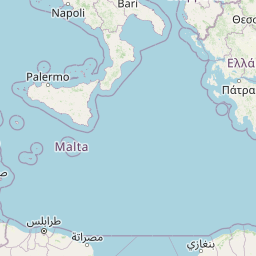
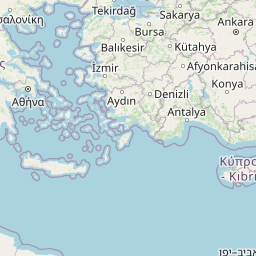
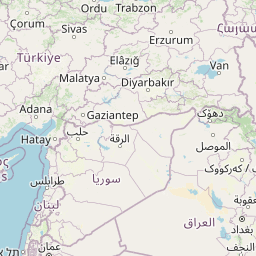
© OpenStreetMap contributors (ODbL)
Who is fighting
The war stands between Israel and Hamas and other armed Palestinian groups in Gaza. According to OCHA, Hamas has been the de facto authority in Gaza since the movement took control in June 2007 after fighting with Fatah.
On 7 October 2023, Hamas and other Palestinian armed groups carried out a coordinated attack on southern Israel. According to the UN Independent International Commission of Inquiry, citing Israeli sources, more than 1,200 people were killed, at least 809 of them civilians, and at least 252 were taken hostage to Gaza. The attack is described in the background item The 7 October 2023 attack on Israel.
A ceasefire agreement was reached on 10 October 2025. OCHA documents that Israeli airstrikes, shelling and munitions still hit inhabited areas, and that civilian casualties continue.
Israel presents the war as self-defence after the attack of 7 October 2023 and says that operations after the ceasefire target those who break the agreement. Hamas presents its fight as resistance to occupation and was a party to the ceasefire. This item does not adjudicate those claims; it describes the humanitarian consequences as measured by the UN.
Background
Two years of war destroyed homes, fields, water, electricity and the health system. In June 2026, UNOSAT assessed that 82 percent of all buildings were destroyed or damaged. In August 2025, IPC confirmed famine in Gaza Governorate. After the ceasefire, more space opened for assistance and commercial deliveries, and food security moved, according to IPC, from a hunger emergency, where families skip meals and children die of malnutrition (IPC Phase 4), to a food crisis (IPC Phase 3). The gain rests on assistance: without it, IPC assessed that 1.9 million people – 90 percent of the population – would face high food insecurity.
OCHA reports that as of 4 November 2026 the Gaza Ministry of Health has reported 74,618 Palestinian deaths since the start of the war – roughly as many as live in Holbæk Municipality (75,299). The UN has not verified all figures. For the death toll in Israel on 7 October 2023, the Commission of Inquiry, citing Israeli sources, reports more than 1,200 killed, of whom at least 809 were civilians and 314 were military personnel; that is set out more fully in the background item.
The situation now

Between mid-April and 30 June 2026, 1.2 million people were in food crisis or worse, of whom 212,000 were in a hunger emergency – roughly as many as live in Odense Municipality (213,140). For July–December, IPC expected 1.4 million to be in food crisis or worse, while the figure in hunger emergency remained unchanged, and all five governorates were classified in food crisis. Child malnutrition has also declined; IPC still expected, however, that around 74,200 children under five would need treatment through April 2027.
The mechanism is now different from during the famine of 2025. Most families depend on assistance because crops, jobs and homes are gone. In early November, OCHA wrote that assistance had fallen, and that on 1 November Israeli authorities notified UN agencies that humanitarian and commercial shipments from Egypt would be suspended, with some exceptions, citing smuggling concerns. The Food Security Sector warns that the daily distribution of meals could fall from around 600,000 to 330,000 if the halt continues. At the same time, people lack tents and tarpaulins ahead of winter. As of 1 November, the Shelter Cluster put the need at about 121,000 tents and 561,000 tarpaulins; stocks in Gaza held around 2,800 tents and 76,000 tarpaulins, and timber for emergency kits continued to be refused at entry. More than 950,000 people were living in displacement camps at medium or high risk of flooding.
Under the ceasefire, the International Committee of the Red Cross (ICRC) facilitated, from October 2025, the release of 20 living hostages and later the return of 27 of 28 deceased hostages. On 26 January 2026, the Israeli military said that the body of the last remaining hostage, Sergeant Ran Gvili, had been returned to Israel. On 28 January, the UN Deputy Special Coordinator, Ramiz Alakbarov, said that all hostages had been returned. On 29 January, the ICRC wrote that the transfer operations under the ceasefire agreement had thereby been completed.
Between 5 November 2025 and 4 November 2026 the cumulative reported Palestinian death toll rose from 68,875 to 74,618, a difference of 5,743.
What to watch
The winter rains have begun. The nearest turning point is whether supplies – especially from Egypt – come in on a sufficient scale for meals, bread, fuel and tent materials to last through the coming two months. IPC already warned in August that coverage was falling, and that the renewal of permits for 37 international organisations was uncertain. Whether the ceasefire holds, and whether the next IPC round still places all of Gaza in food crisis, will determine whether the measurable gains remain in place.
Related items

The figures
| What | Figure | Period | As of | Source | Confidence |
|---|---|---|---|---|---|
| Killed in totalThe difference between OCHA's cumulative reported Palestinian death totals, 74,618 as of 4 November 2026 minus 68,875 as of 5 November 2025. There is no OCHA snapshot dated 4 November 2025; 5 November is the nearest available count after the exact 12-month mark, so the period is one day short of 12 months and the figure is a floor. OCHA writes that the UN has not verified all figures. Later totals may include deaths identified after the earlier date. | 5,743 | 5 November 2025–4 November 2026 | OCHA | Estimate | |
| In emergency or worse (IPC 4+)All five governorates were classified in food crisis. The analysis reports no population in famine or catastrophe. | 212,000 | July–December 2026, the same level as mid-April–30 June 2026 | IPC | Verified | |
| In food crisis or worse (IPC 3+)67 percent of the population. In mid-April–30 June 2026 the figure was 1.2 million (59 percent). Without food assistance, IPC assessed that 1.9 million would face high food insecurity. | 1.4 million | July–December 2026 (projection) | IPC | Verified | |
| Famine officially classifiedFamine was confirmed in Gaza Governorate in August 2025. The current analysis does not classify famine. An earlier risk through mid-April 2026 has expired and is not repeated for July–December. | No | mid-April–December 2026 | IPC | Verified | |
| IPC alert of a risk of famineThe August analysis warns that the gains are fragile, but it does not issue a current famine alert for the projection period. | No | July–December 2026 | IPC | Verified | |
| Killed in total (background only)Figures from the Gaza Ministry of Health, relayed by OCHA, which writes that the UN has not verified all figures. 74,237 deaths had been identified as of 7 October 2026. OCHA also reported 1,593 deaths since the 10 October 2025 ceasefire. | 74,618 | reported Palestinian deaths since 7 October 2023 | OCHA | Estimate |
All figures are minimums, not totals: documented cases are fewest exactly where access is worst. Grey rows are background and do not affect the placement.
Sources
- IPC, Gaza Strip Special Report, 16 April–31 December 2026 (published 13 August 2026)
- OCHA, Reported impact snapshot, Gaza, 4 November 2026
- OCHA, Reported impact snapshot, Gaza, 5 November 2025
- OCHA, Humanitarian Situation Report, 5 November 2026
- Statistics Denmark, FOLK1A, population as of 1 July 2026
- CARE, Crisis Report 2025 (28 January 2026)
- Independent International Commission of Inquiry, report A/HRC/56/26, 14 June 2024
- OCHA, The humanitarian impact of the internal Palestinian divide on the Gaza Strip, June 2017
- ICRC, Release and transfer operations under ceasefire agreement completed, 29 January 2026
- Ramiz Alakbarov, briefing to the UN Security Council, 28 January 2026
- IDF, Operation Returning Home, update of 26 January 2026
Changelog
- Headline clarified to name the subject
- The licence on the first image has been corrected to CC BY-SA 4.0, as stated on the file's Wikimedia Commons page. CARE's measured media-coverage count has been placed in the media_coverage field and taken out of the body, so it is not stated twice. A location and coordinates have been added so the site can show a small locator map.
- Technical terms such as IPC Phase 4 replaced with plain language in the reader-facing text.
- deaths_12m derived as 74,618 as of 4 November 2026 minus 68,875 as of 5 November 2025. Status changed from watch to active because the figure meets tier 2. Process remarks removed from the body and from notes. Body revised for bias by omission: a precise, sourced account of the 7 October 2023 attack, the status of the hostages under the ceasefire, Israel's stated reason for the entry halt, and Hamas's rule in Gaza since 2007. New background item israel-7-oktober linked via the related field.
- Item created on the basis of IPC and OCHA after the October 2025 ceasefire.