Sub-Saharan Africa is now home to the most Christians
Sub-Saharan Africa
- adherents
- 697.4 millionnumber of Christians in sub-Saharan Africa in 2020
Last reviewed · Last changed
Researched and written with AI · Method

In 2020, for the first time, more Christians lived in sub-Saharan Africa than in Europe. Pew Research Center puts the number at 697,420,000, a rise of 31.2 percent from 531,650,000 in 2010. Almost one in three of the world's Christians, 30.7 percent, now live in the region, compared with 22.3 percent in Europe. A century ago about two-thirds of Christians lived in Europe, and only a very small share in sub-Saharan Africa.
- The development
- A landmark: many people, and surprising
- Scale
- International
- Kind
- Growth
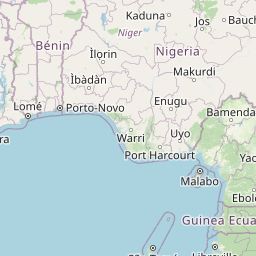
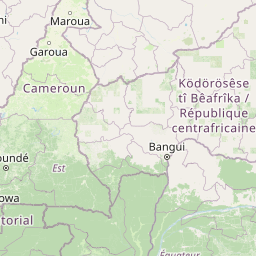
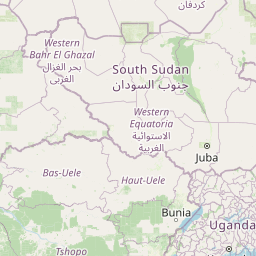
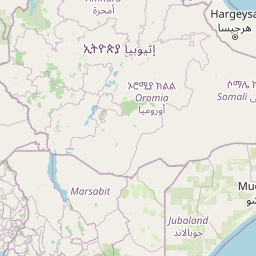
© OpenStreetMap contributors (ODbL)
What is happening
The increase is driven first of all by the fact that far more children are born in the region than in Europe, and that most of them are still raised as Christians. The share of residents in sub-Saharan Africa who are Christian rose only slightly, from 61.7 to 62.0 percent, because the whole population grew almost as fast as the Christian total. Sub-Saharan Africa was also the only one of Pew's six regions where the Christian share rose at all. In Europe both the number and the share fell, driven by adults leaving Christianity. The overall global share, and the losses in Europe and North America, are covered in the related item.
In only one country in the whole study did the Christian share grow by at least five percentage points: Mozambique, to 61 percent in 2020. Pew writes that a governmental anti-religious campaign there officially ended in the 1980s, and that the Christian share has been rising since. The picture in the region is otherwise not uniform. In Benin the Christian share fell by five percentage points, the largest fall in sub-Saharan Africa in Pew's list of substantial country changes.
The growth is taking place in a region where churches and believers in several countries are at the same time exposed to violence. The related item on religious freedom in Nigeria documents killings of both Christians and Muslims. The two pictures belong together: a rising number of Christians, and serious pressure on freedom of religion in parts of the same area.
Who is behind it
The figures come from Pew Research Center and are based on censuses and surveys, not on the churches' own membership rolls. Pew points to natural population growth as the decisive mechanism, not to a single revival or a single church. This is not a new decision, but a measured shift over ten years.
What to watch
The next Pew assessment, which will show whether sub-Saharan Africa widens its lead, and whether the Christian share of the region's residents remains around 62 percent. Whether countries such as Mozambique continue to stand out. And whether the growth can be set beside the documented attacks on churches and believers in parts of the region.
Related items


The figures
| What | Figure | Period | As of | Source | Confidence |
|---|---|---|---|---|---|
| AdherentsPew's table figure, rounded to the nearest 10,000. In 2010 the figure was 531,650,000, a rise of 31.2 percent. The share of the region's residents who were Christian rose only slightly, from 61.7 to 62.0 percent, because the whole population grew almost as fast. They accounted for 30.7 percent of all Christians in the world in 2020, compared with 22.3 percent in Europe. | 697.4 million | number of Christians in sub-Saharan Africa in 2020 | Pew Research Center | Estimate |
Sources
Changelog
- Image added: newly baptised Catholics in a church in Nigeria, 5 April 2026 (CC BY-SA 4.0, Samizxyn).
- Reviewed under the new church and revival criteria, which Jack approved on 11 November 2026. Tier set to 1, because it is a documented turning point: sub-Saharan Africa now has more Christians than Europe. Report-only fields were removed.
- Positive item created on sub-Saharan Africa becoming the region with the most Christians in 2020, according to Pew.